


Four ways to cook corned beef.
One plan that keeps you out of panic mode.
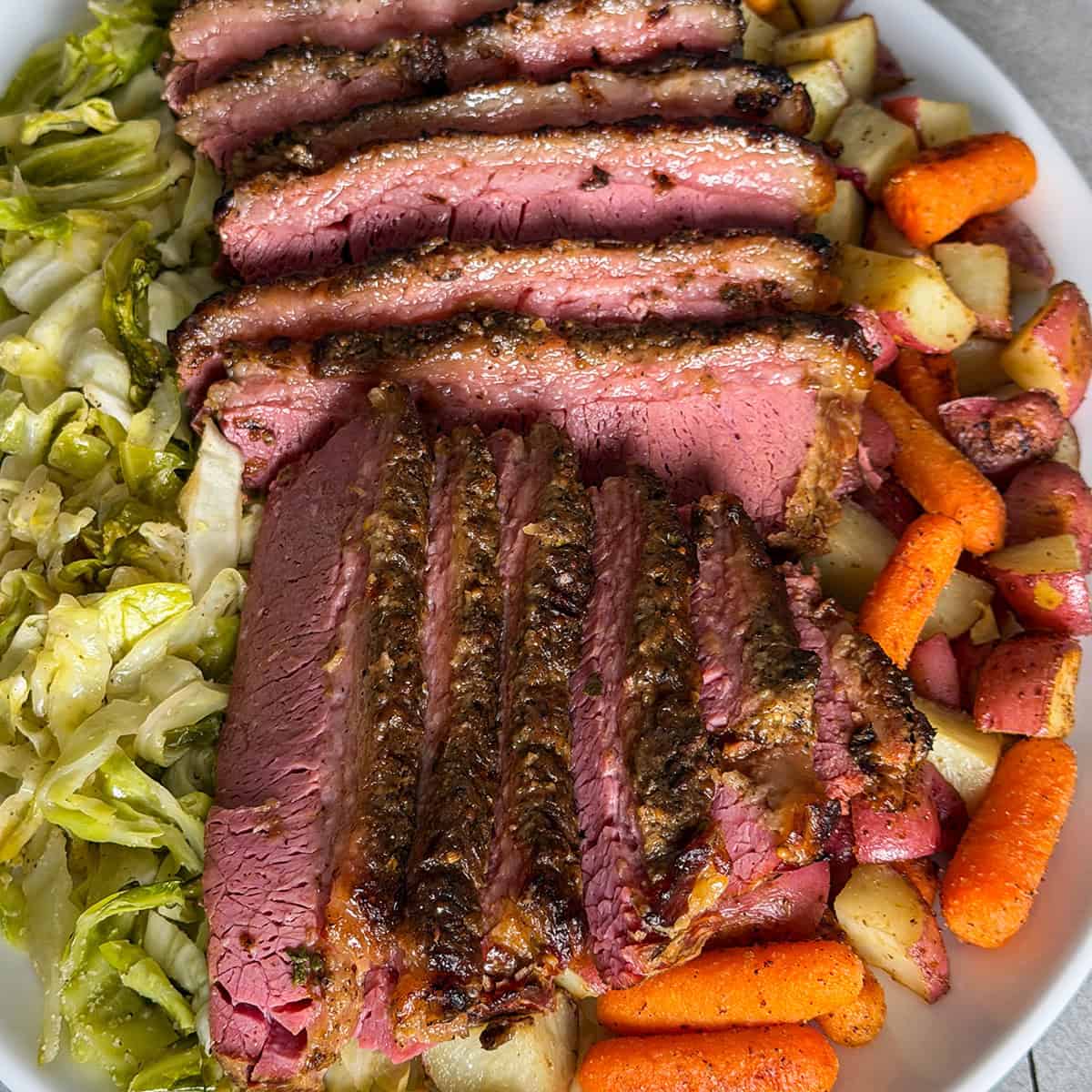
Pick your method, follow the steps, and sit down to fork-tender meat with vegetables that actually have flavor and texture. No mush. No panic.
Corned beef is one of those meals that looks simple on paper but stresses people out in practice. Which method fits your kitchen? What order should the meat and vegetables cook in? Why is the meat chewy? Why does the cabbage taste like nothing?
This guide answers all of it. Pick your cooking method, grab the shopping list, and follow the prep and cooking order for a complete dinner that makes sense. No dry meat. No mushy sides. A clear order of work.
This is the system. It’s built to be repeatable.
Real Talk
Let me be honest. Boiling a brisket in a pot of water with some cabbage until everything turns gray is a crime against food. I grew up eating it that way and thought that was just what corned beef was. Tough. Bland. Once a year.
It does not have to be that way. This guide exists because every method here gives you fork-tender meat and vegetables worth eating. Pick any of them and you will never go back to the gray boil.
Step 1: The Decision Matrix (Choose Your Method)
Every method below produces fork-tender corned beef. The difference is how much time you have and what kind of cook day you want. Pick the one that fits your schedule.
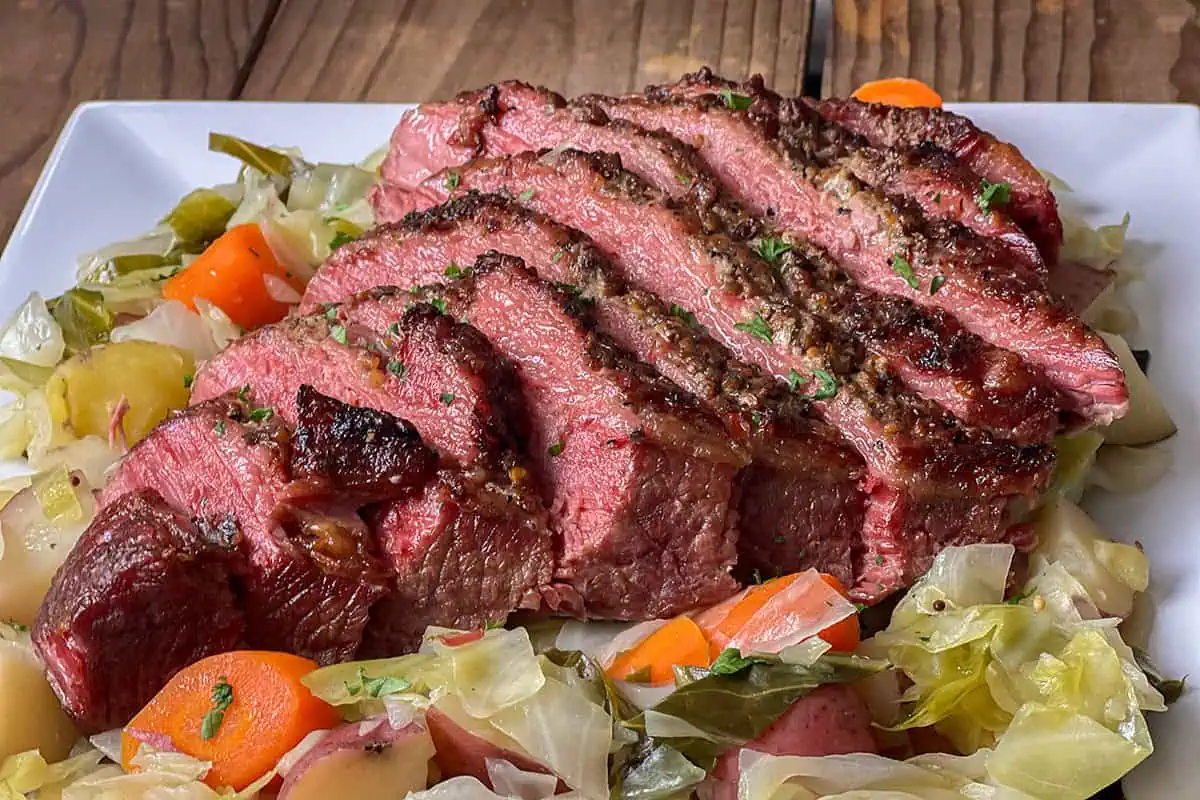
The Pressure Cooker Route
Best for: Cooks who want to use a pressure cooker and finish the vegetables in the same pot.
Cook the corned beef according to the linked recipe, then allow its natural release before removing the brisket. Cook the vegetables in the same pot afterward. Use the recipe card for the cooking and release instructions, and leave room in your plan for resting, slicing, and serving.
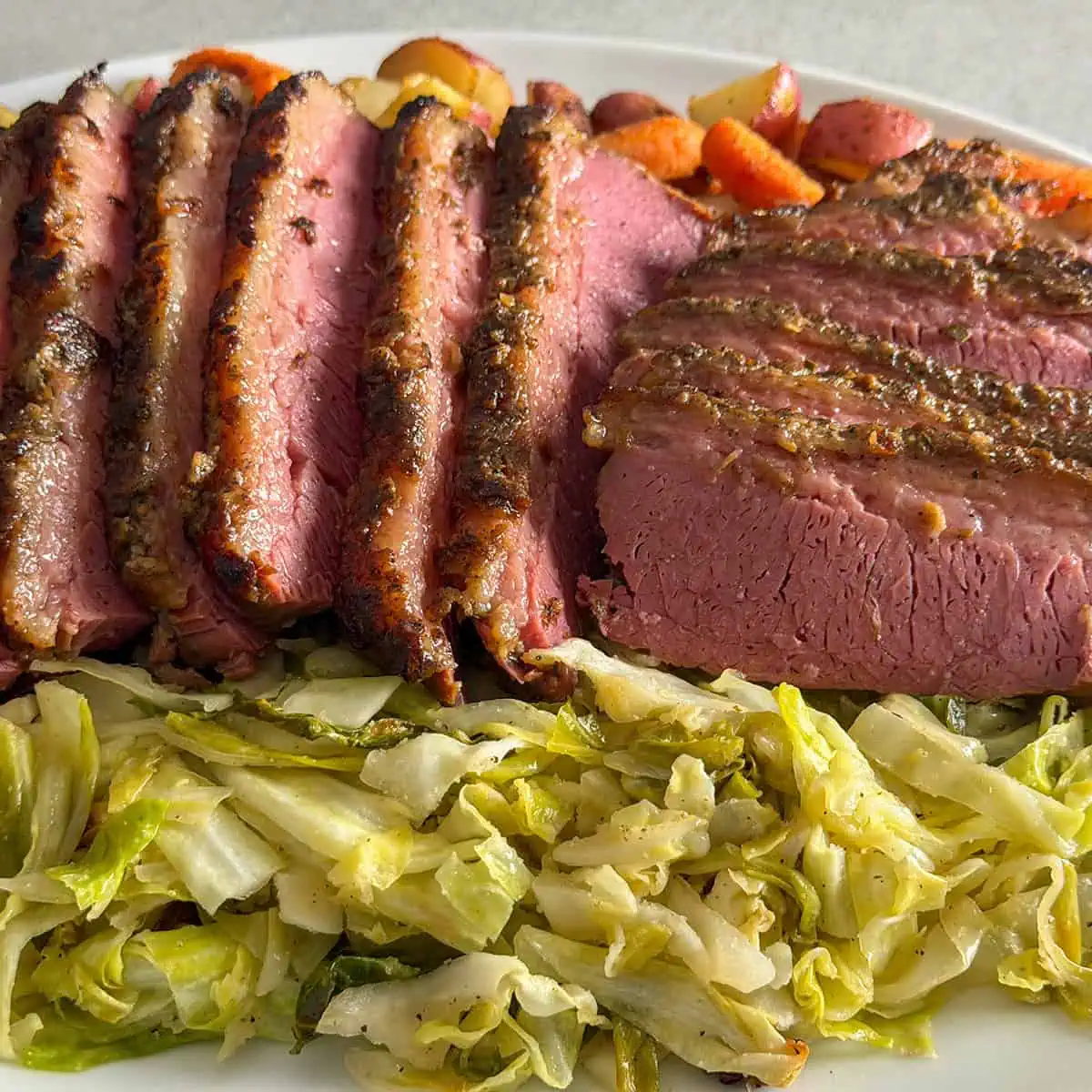
The Set-and-Forget (Slow Cooker)
Best for: Cooks who want the slow cooker to handle the brisket and the oven to handle the vegetables.
The brisket cooks on LOW in the slow cooker. But here is the difference: we do not cook the vegetables in the slow cooker. They get roasted on a sheet pan at 425°F for crispy, caramelized edges and real texture. Use the linked recipe to guide the cooking and coordinate the oven step with your kitchen space. No more gray, waterlogged sides.
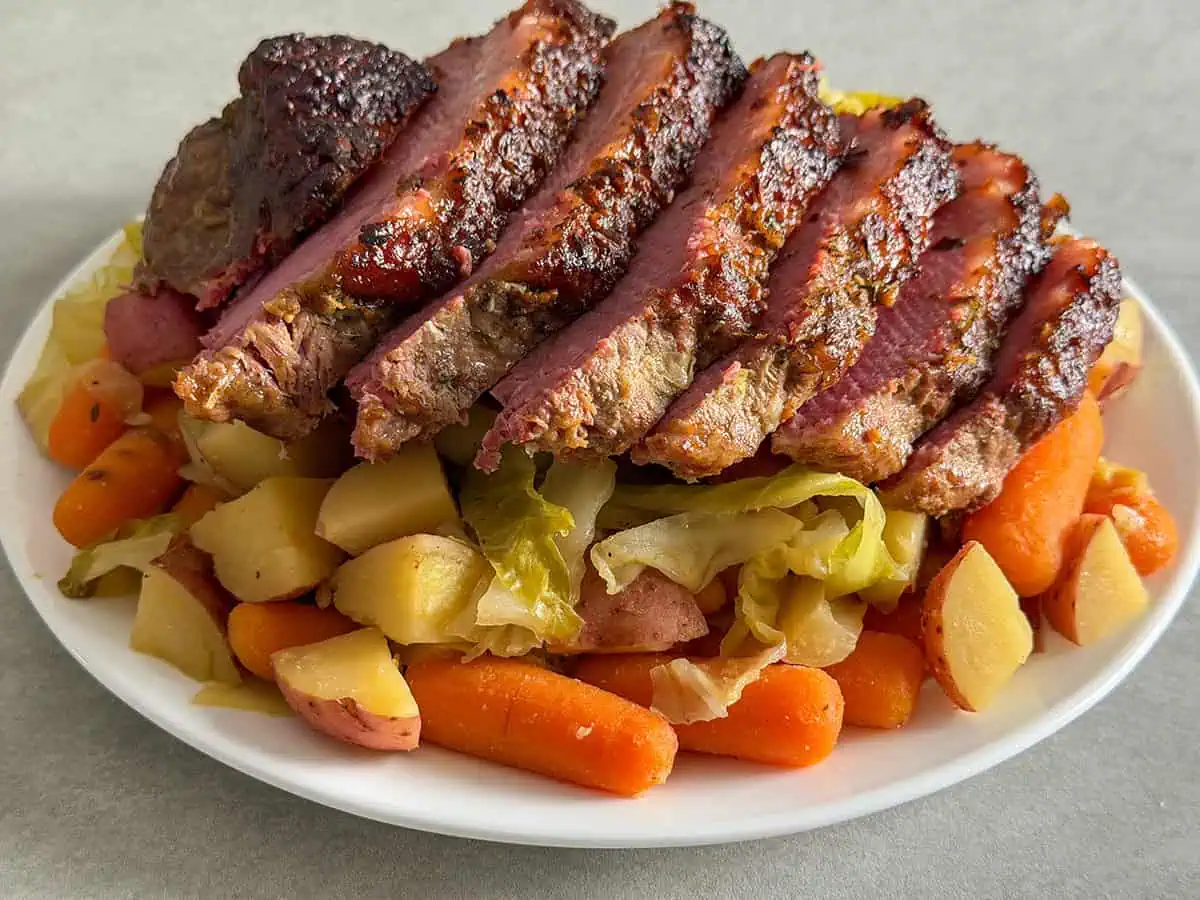
The Sunday Classic (Oven-Roasted)
Best for: Cooks who want a Dutch oven dinner with vegetables added in stages.
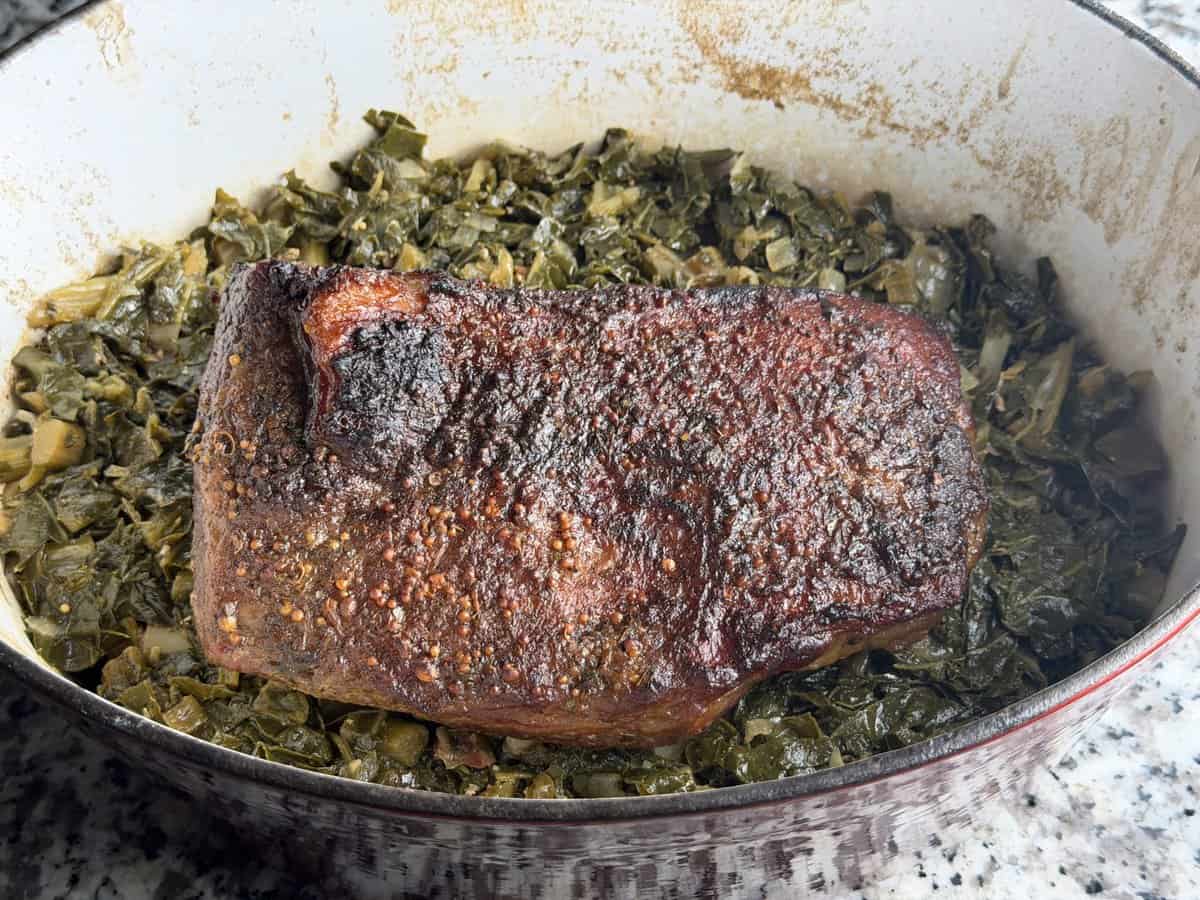
A Dutch oven braise at 300°F. Low and slow, with a 4 lb brisket. The vegetables go in stages: potatoes and carrots first, then cabbage. Follow the linked recipe for the cooking instructions and when to add each vegetable. The result is the most traditional corned beef dinner with the best vegetable texture of any method.
The Culture Shift (Southern Style)
Best for: Flavor chasers who want something completely different.
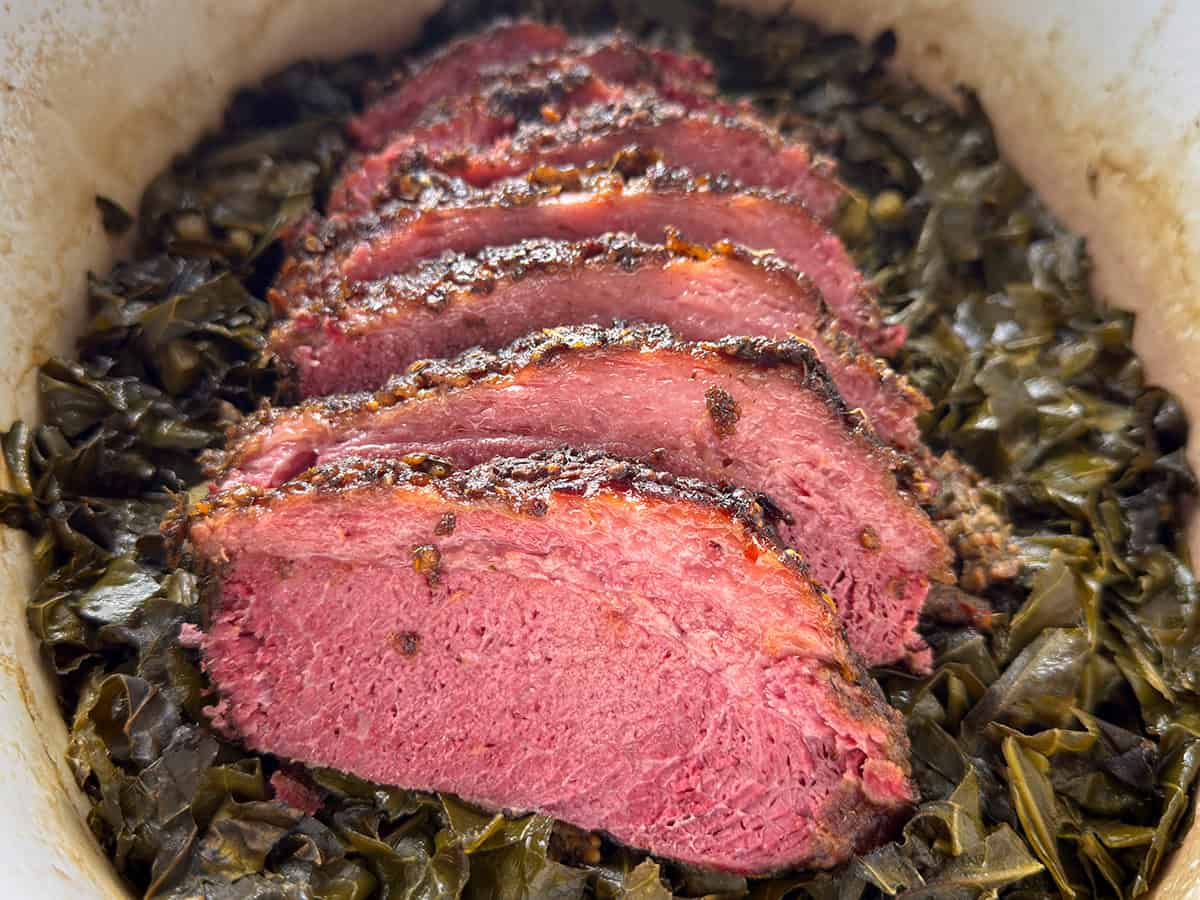
This one throws out the cabbage entirely. The brisket braises at 300°F over a bed of collard greens and thick-cut bacon. The pot likker at the bottom is smoky, tangy, and rich. Served in a bowl with greens on the bottom, sliced meat on top, and broth ladled over everything. If you have never tried this, it will change how you think about corned beef.
The "Tender Every Time" System
No matter which method you choose, two rules apply across the board. These are the non-negotiables.
We never boil vegetables into mush. Every method in this series has a specific vegetable strategy. Pressure cooker: vegetables after the beef. Oven: staged vegetables near the end. Slow cooker: roasted vegetables on a sheet pan. Southern: collards braise with the brisket. The goal is the same every time. Flavor and texture, not gray mush.
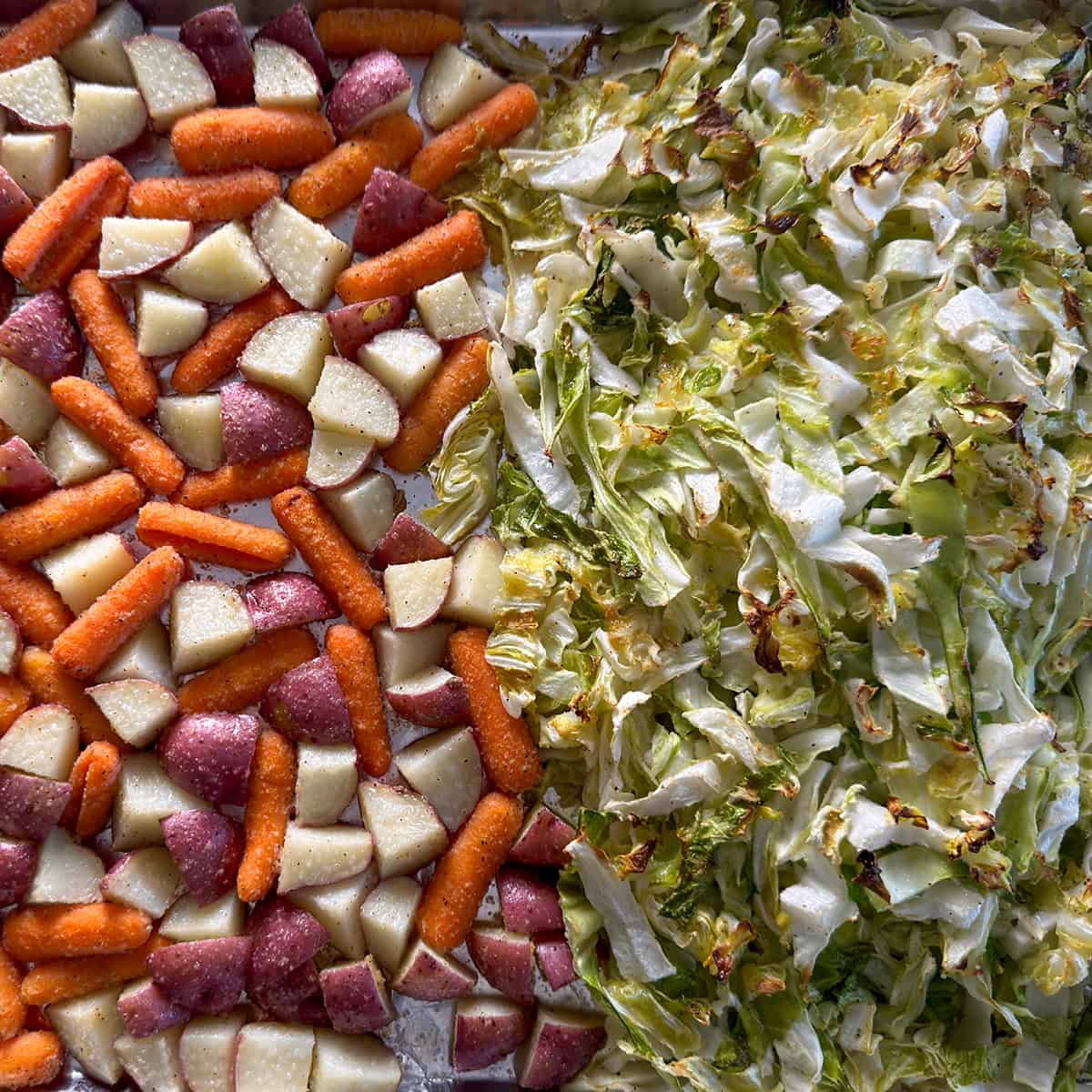
We always slice against the grain. This is the single biggest factor in whether your corned beef feels tender or chewy. Look at the lines running across the brisket and cut perpendicular to them. Every recipe in this series calls this out, because it matters that much.
Technique Highlight
The #1 Rule: Slice against the grain. It does not matter how well you cook the brisket if you slice it wrong. Look at the lines (muscle fibers) running across the surface of the meat and cut perpendicular to them. This gives you those tender, clean slices that pull apart easily. Cutting with the grain gives you chewy, stringy meat no matter how long you cooked it.
Upgrade Move: Crispy Garlic Armor
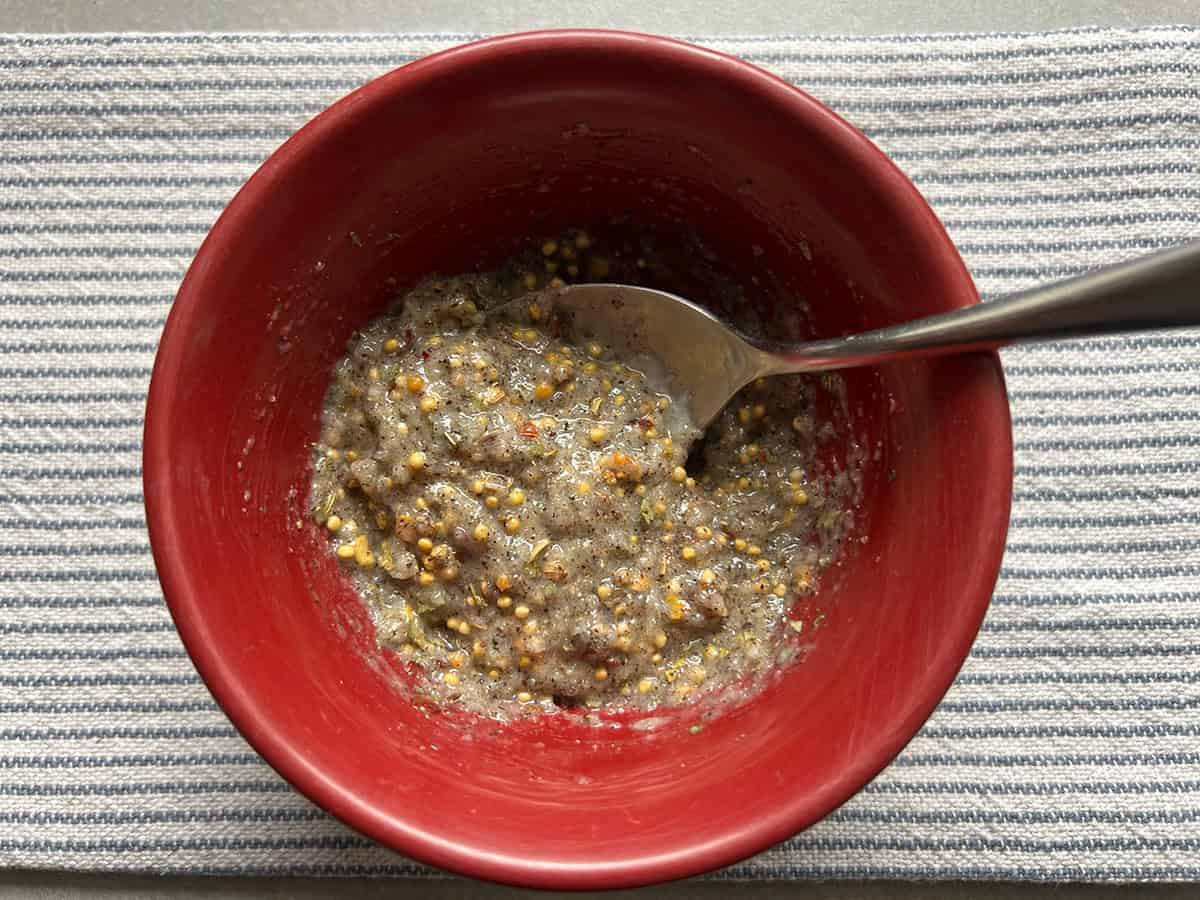
Optional. Not required. But it’s the crust people remember. Mix 2 tablespoons garlic paste, 1 teaspoon black pepper, and the reserved spice packet. Spread it in a thin, even layer over the fat cap, then broil on high on the bottom rack until crisp, watching closely. Follow your chosen recipe for the broiling instructions.
Step 2: The Master Shopping List
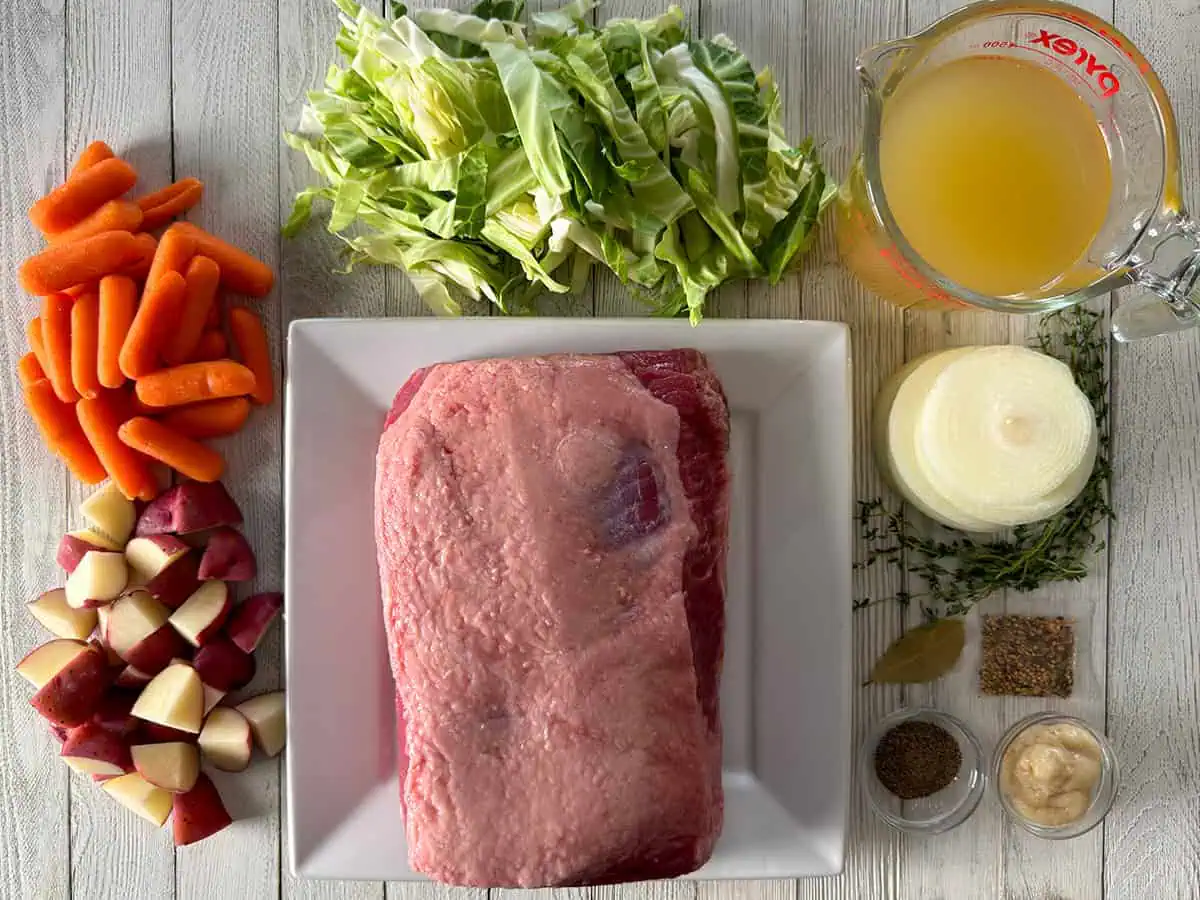
Built for: one 4 lb corned beef brisket, serving 6 to 8. Scale up if you are feeding a crowd.
This list covers the base ingredients shared across all four methods. Check the individual recipe post for your chosen method for any extras (like bacon and collard greens for the Southern version, or olive oil for the slow cooker roasted vegetables).
Produce
- 1 onion
- 1.5 lbs baby potatoes (not needed for Southern version)
- 1 lb baby carrots (not needed for Southern version)
- 1 small head green cabbage (not needed for Southern version)
- 1 large bunch fresh collard greens (Southern version only)
- Fresh thyme (6 sprigs)
Meat and Dairy
- 1 corned beef brisket (4 lbs), with spice packet
- 4 slices thick-cut bacon (Southern version only)
Pantry
- Chicken broth (1 to 4 cups depending on method)
- Garlic paste (for the optional crispy topping)
- Kosher salt
- Black pepper
- Garlic powder (optional, for seasoning vegetables)
- Onion powder (optional, for seasoning vegetables)
- Apple cider vinegar (Southern version only)
- Red pepper flakes (Southern version, optional)
- Olive oil (Slow cooker version only, for roasting vegetables)
- 1 bay leaf
A Note on Gluten-Free Diets
For a gluten-free meal, check the corned beef, included spice packet, and broth labels. If using your own spice blend, check that blend too.
Step 3: Prep and Cooking Order
Choose and Shop
- Buy the brisket early. St. Patrick's Day briskets sell out. Shop for the size you want as part of your holiday planning. A 4 lb brisket feeds 6 to 8 people comfortably.
- Choose your method. Read through the recipe for your chosen method so there are no surprises as you cook. If you are doing the Southern version, include collard greens and bacon in your shopping list.
Prepare What You Can
- Prep the garlic topping. Mix the garlic paste, black pepper, and spice packet in a small bowl. Cover and refrigerate.
- Prep the vegetables. Quarter the potatoes, slice the cabbage (like shredded collards, not wedges), and store them in bags or containers in the fridge. If doing the Southern version, wash, stem, and chop the collard greens.
- Check your equipment. Make sure your pressure cooker, slow cooker, or Dutch oven is clean and ready. Pull out your sheet pans if you are doing the slow cooker method, and plan oven space for the vegetables and optional broiling.
Start Your Chosen Method
- Slow cooker method: Follow the linked slow cooker recipe for the brisket, including its LOW setting and cooking instructions. Plan a separate oven step for the vegetables.
- Oven method: Set up the Dutch oven and follow the linked oven recipe for the 4 lb brisket. Potatoes, carrots, and cabbage are added in stages.
- Southern method: Build the pot with collard greens, bacon, and brisket, then follow the linked Southern recipe for the braise.
- Pressure cooker method: Follow the linked pressure cooker recipe for the brisket and natural release. The vegetables cook in the same pot after the brisket comes out.
Coordinate the Vegetables
- Slow cooker method: Preheat the oven to 425°F. Prep and season the vegetables for the sheet pan. Follow the recipe for roasting.
- Oven method: Add potatoes and carrots to the Dutch oven, then cabbage, following the staged vegetable instructions in the recipe.
- Southern method: The collards braise with the brisket. Follow the recipe through to tenderness.
- Pressure cooker method: Allow the natural release as directed in the recipe, then remove the brisket before cooking the vegetables in the same pot.
Finish and Serve
- Broil the brisket (if using the garlic topping). Use high heat and the bottom rack, watching closely until crisp.
- Rest the meat. Let it rest off heat before slicing, following your chosen recipe.
- Slice against the grain. Always.
- Plate and serve. Spoon cooking broth or pot likker over the meat.
Step 4: Dessert and Leftovers
The Make-Ahead Dessert: Bailey's Irish Cream Cheesecake
If you want a St. Patrick's Day dessert that actually feels like an event, this is it. The cheesecake is rich, creamy, and spiked with Bailey's. Plan it as a make-ahead dessert and use the linked recipe to work its preparation into your corned beef plan.
For more cheesecake options, the cheesecake guide compares flavors, pan choices, and cooling and chilling steps.

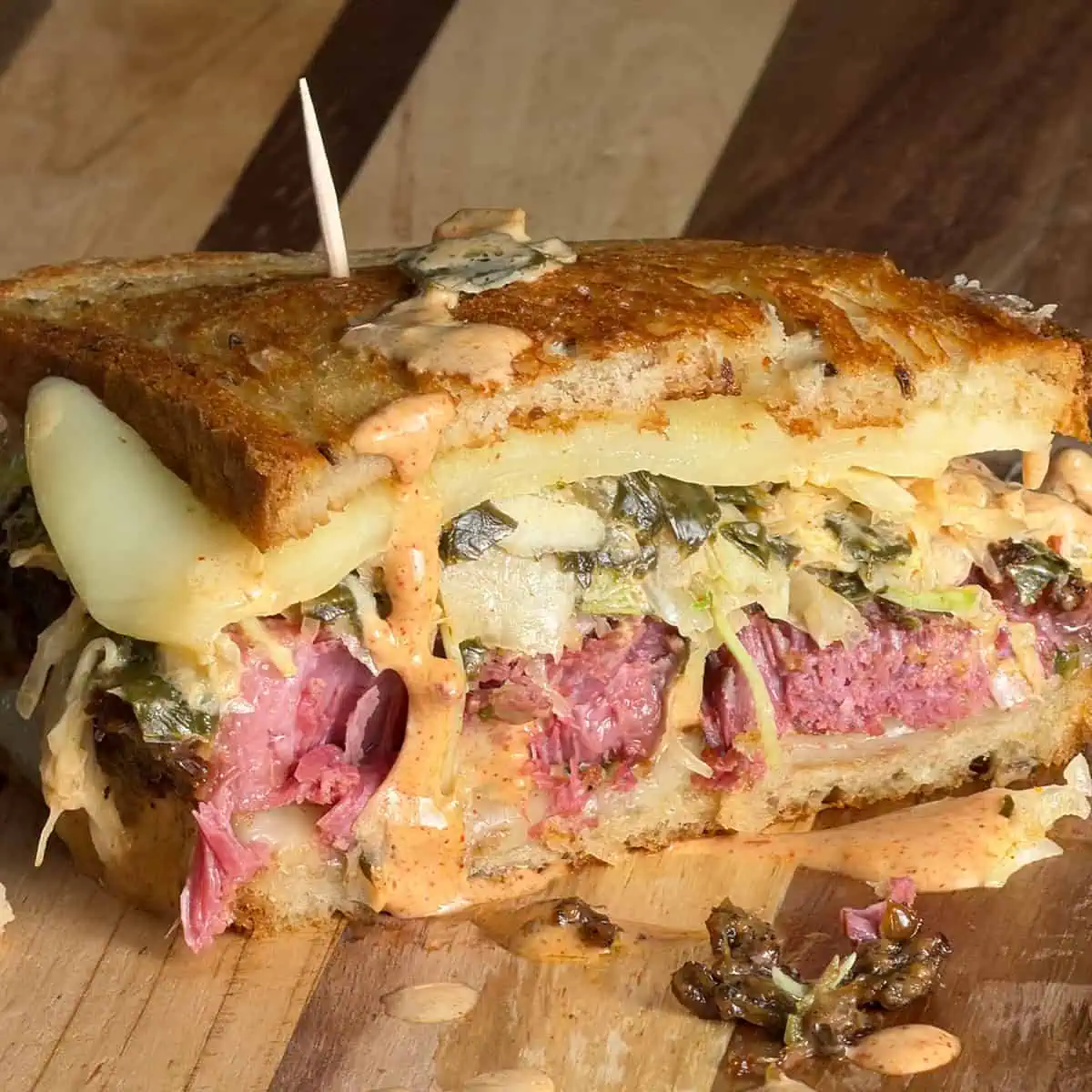
The Leftover Plan: The "Gary Reuben" Sandwich
The Gary Reuben is what happens when leftover corned beef stops being an afterthought. We are not reheating slices in the microwave and calling it lunch. The meat gets crisped in a hot skillet until the edges caramelize. The bread gets butter-grilled and loaded with melted Swiss on one side and provolone on the other. And the sauce goes everywhere.
This is a crispy, saucy leftover corned beef sandwich loaded with melted cheese, a punchy slaw, and enough sauce to require napkins.
Holiday Dinner Game Plans
- Thanksgiving Dinner Game Plan
- Christmas Dinner Game Plan
- New Year's Day Game Plan
- Easter Dinner Game Plan
- St. Patrick's Day Corned Beef Game Plan


Dawn Tuovila
Thank You Gary!
This is by far the best corned beef and cabbage ever. Will make this way every time
Gary White
Thank you Dawn! Which version did you try?